Risk Mitigation Strategies: A Comprehensive Guide to Protecting Your Business

All organizations are at risk. No matter if you’re a startup, a multinational corporation or a not-for-profit group, you need to have the ability to recognize potential dangers and respond to the situation in order to minimize the damage.

Risk-management-process

Risk mitigation strategies are actions you take proactively to minimize the chances and impact of risk impacting your business. Mitigation is the aspect of risk management where you are taking action steps after knowing what risks are present, whereas risk management includes learning, identifying and responding to all risks.

The Importance of a Risk Mitigation Strategy for Your Business

This guide steps you through all of the information you’re going to need to become successful in creating and enacting effective risk mitigation strategies that will help safeguard your assets, your reputation and your bottom line.

What is Risk Mitigation?

Risk Mitigation Basics

Risk mitigation is the process to minimize risk occurring or limit the effect if it does occur. It’s the link between identifying a risk and dealing with the consequences. If you put a risk mitigation strategy in place, you’re taking steps to make your organization more resilient.

Think of risk mitigation as the treatment plan, with risk management as the diagnosis.

For instance, if your company determined that data breaches are a major risk, a risk mitigation approach might include:

  • Installation of encryption software on all company devices
  • Implementation of multi-factor authentication across your network
  • Building an incident response team (IRST) to share and apply information security strategies and skills
  • Regular security audits

All these steps minimize the risk of a breach or the damage it can cause in case of one.

Risk Mitigation vs. Risk Management

These terms are often used interchangeably, but they describe different concepts within the broader risk framework.

Risk Management is the umbrella discipline that encompasses:

  1. Risk identification (discovering what could go wrong)
  2. Analysis of risks (understanding why they are risk items)
  3. Risk response (developing a strategy to mitigate or eliminate risk)
  4. Risk monitoring (observing if you are successful or not)

Risk Mitigation specifically refers to the response phase—actions taken to mitigate risk. It’s a part of a solid risk management program.

All four elements are necessary to create a comprehensive risk management program. Identification and analysis without mitigation is wasteful. If you don’t identify risks, you won’t protect yourself.

The Importance of Risk Mitigation

Those that have formalized risk mitigation strategies will see tangible benefits:

Financial Protection: For every dollar invested in risk mitigation, several dollars in potential losses are saved. Studies across industries show that 80% of companies that have implemented risk management programs report they suffer 20-30% fewer operational disruptions.

Operational Continuity: Risk mitigation ensures that your business continues to operate during disruptions. Businesses with mitigation strategies for supply chain risks were able to adapt faster than competitors when supply chains were impacted by COVID-19.

Reputation Management: The way you manage risks will define how customers, employees, and partners view your organization. Risk mitigation is a proactive approach that shows competence and reliability.

Stakeholder Confidence: Investors, board members, and lenders will want to be sure you have considered what could possibly go wrong and you have a plan to address it. Risk mitigation strategies give that assurance.

Regulatory Compliance: Many industries are subject to regulations that stipulate documented risk management. Healthcare, finance, energy, and manufacturing all have compliance requirements that involve risk mitigation planning.

The Four Primary Risk Mitigation Strategies

There are four basic response strategies to identified risks that are known to risk professionals. Most organizations use a combination of these strategies for different risks.

1. Risk Avoidance

Risk avoidance involves avoiding the activity or exposure that causes the risk.

When to Use It: If the impact of the risk is high and the value of the activity is low or irreplaceable.

Real-World Examples:

  • A pharmaceutical firm declines a new line of drugs due to high regulatory demands and lack of confidence the drug will be successful
  • A manufacturing company is reluctant to open a new factory in an unstable area and instead uses a contract manufacturer
  • An investment firm decides not to engage in high-frequency trading because of technology and regulatory risks

Advantages:

  • Eliminates the specific risk
  • Often the most cost-effective for high-risk, low-value activities

Disadvantages:

  • May cause you to miss out on important business opportunities
  • Risk cannot always be eliminated, especially in certain business fields

Implementation Tip: Avoidance is not a tactic taken for granted—it’s a strategy to be considered carefully. Before choosing avoidance, make sure the opportunity cost (what you miss out on) doesn’t outweigh the risk you’re avoiding.

2. Risk Reduction (Mitigation)

Risk reduction includes any specific action taken that reduces the likelihood that the risk will happen or reduces the impact if the risk does occur.

When to Use It: To continue the activity but make it safer and/or more resilient.

Real-World Examples:

  • Backup power systems help mitigate the impact of power loss to the business
  • Vehicle maintenance programs decrease the likelihood of accidents in fleet operations
  • Cybersecurity training minimizes the risk of employees causing security breaches
  • Having multiple suppliers means that if one supplier fails, the effects are lessened on the supply chain

Advantages:

  • Helps you maintain beneficial activities and decrease risk
  • Avoidance often isn’t feasible for critical business functions
  • Is flexible enough to comply with certain risk factors

Disadvantages:

  • Does not completely remove risk (leaves residual risk)
  • Requires continuous investment and maintenance
  • Proper implementation is essential for effectiveness

Implementation Tip: Address the root cause rather than the symptom of the problem for the most effective risk reduction strategies. When complaints suggest quality issues, better training to fix the problem (address the cause) is more effective long-term than handling complaints faster (treating the symptom).

3. Risk Transfer

Risk transfer is the process of passing the financial responsibility for a risk to another party, usually through insurance or contractual arrangement.

When to Use It: When the risk can be better managed by another party.

Real-World Examples:

  • Purchasing liability insurance shifts the financial liability of lawsuits to an insurance company
  • Warranties and extended service contracts transfer equipment failure risk to manufacturers
  • Outsourcing specific functions under contract transfers operational risk to service providers
  • Purchasing weather derivatives shifts financial risk associated with agricultural commodity price volatility

Advantages:

  • Frees up time to concentrate on your core business
  • Offers financial security with certainty of insurance premiums
  • Shares expertise with parties specialized in handling specific risks

Disadvantages:

  • Requires additional cost (insurance premiums, higher contract costs, etc.)
  • Does not eliminate the risk—someone else has to bear it
  • Insurance has limits and exclusions
  • Does not protect against reputational damage

Implementation Tip: Be sure to understand what is being transferred. Insurance removes the financial risk of an event, but doesn’t remove the reputational risk. In case of a data breach, insurance can help with financial loss, but not with damage to your brand.

4. Risk Acceptance

Risk acceptance involves recognizing a risk and choosing not to take action to mitigate it, but instead to accept the risk.

When to Use It: When mitigation is too expensive or it is impossible to do so.

Real-World Examples:

  • A retailer accepts that some products will be damaged in transit rather than spending premium money on special packaging that would make products too expensive for customers
  • Some software firms acknowledge that bugs will appear in released software and fix them in updates instead of delaying releases indefinitely
  • Manufacturers make allowances for normal equipment wear and maintain a replacement stockpile instead of performing excessive preventive maintenance

Advantages:

  • Minimizes costs for low-impact or low-probability risks
  • Avoids over-investing in mitigation
  • Prevents resources from being stretched across lower priority risks

Disadvantages:

  • Requires willingness to accept potential losses
  • May cause reputation loss if risks are realized publicly
  • Requires special attention to ensure risks don’t escalate beyond expectations

Implementation Tip: Document the reasons for accepting each risk. This creates accountability and helps ensure decisions are purposeful rather than accidental.

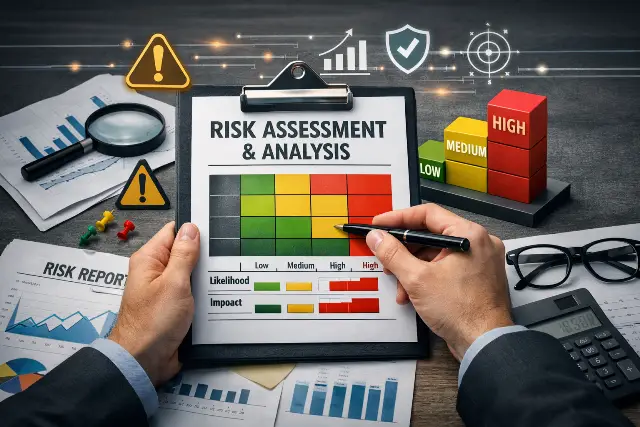
Risk-assessment-and-analysis

Developing Your Risk Mitigation Strategy

The process of creating effective risk mitigation strategies follows these steps:

Step 1: Identify All Risk Categories

You can’t reduce risks if you don’t know about them. Appropriate risk identification draws from several sources:

Internal Sources:

  • Review financial statements for abnormalities
  • Analyze historical incidents and near-misses
  • Interview department heads about operational challenges
  • Gather employee feedback and safety comments
  • Review audit results and compliance reports

External Sources:

  • Monitor industry trends and competitor updates
  • Track regulatory and policy changes in your jurisdiction
  • Identify supply chain weaknesses
  • Assess vendor and partner risk profiles
  • Understand market and economic conditions

Facilitated Sessions:

  • Conduct brainstorming sessions with cross-functional teams
  • Use structured techniques such as SWOT analysis
  • Apply risk assessment procedures relevant to your industry
  • Engage subject matter experts for specialized areas

Output: A detailed risk register listing all risks to your business across all areas.

Step 2: Analyze Risk Likelihood and Impact

Not every risk is equal and requires the same focus. Analysis helps you prioritize which risks need mitigation strategies.

Assess Probability: How likely is this risk to occur?

  • Remote (less than 25% chance)
  • Possible (10-50% chance)
  • Likely (50-90% chance)
  • Virtually certain (over 90%)

Assess Impact: What would be the consequences if this risk becomes a reality?

  • Negligible (little business disruption, less than 1% of annual revenue)
  • Moderate (noticeable disruption, 1-5% of annual revenue)
  • Significant (major disruption, 5-10% of annual revenue)
  • Catastrophic (potentially existential, over 10% of annual revenue)

Calculate Risk Score: Multiply probability by impact to determine overall priority:

  • High-priority risks: Likely probability + Significant impact (require immediate mitigation)
  • Medium-priority risks: Moderate probability + Moderate impact (require planned mitigation)
  • Low-priority risks: Remote probability or Negligible impact (may be accepted or monitored)

This prioritization ensures you’re focusing mitigation efforts on the most important risks.

Step 3: Choose Suitable Mitigation Measures

For each significant risk, consider each of the four types of responses:

Most organizations use a combination of strategies. A production facility could:

  • Avoid contracts in politically unstable areas
  • Reduce accident risk through safety training and proper equipment
  • Transfer liability with comprehensive insurance coverage
  • Accept the risk of minor equipment breakdowns

Step 4: Create Specific Action Plans

Generic strategies become effective through specific implementation:

Instead of: “Improve cybersecurity”

Use: “By December 31, implement multi-factor authentication on all administrative accounts, complete security awareness training for 100% of staff, and schedule quarterly penetration testing.”

Effective action plans include:

  • Specific actions and deliverables
  • Responsible party or department
  • Timeline and milestones
  • Budget requirements
  • Success metrics
  • Dependencies

Step 5: Implement and Monitor

Strategy is worthless if it is not implemented. Effective implementation requires:

  • Resource Allocation: Allocate suitable resources including budget and personnel
  • Communication: Ensure stakeholders are aware of what is being done and why
  • Tracking: Monitor implementation progress against timelines
  • Adjustment: Modify approaches if they’re not working as planned
  • Measurement: Monitor whether mitigation strategies are actually reducing risks

Risk Mitigation Best Practices

Make Risk Management Part of Your Culture

Organizations where risk mitigation succeeds incorporate it into their decision-making processes. This means:

  • Including risk assessment in project planning
  • Creating a forum for risk discussion as a regular conversation at the board level
  • Placing emphasis on risk awareness for employees
  • Rewarding risk-aware decision making

In companies with strong risk cultures, people throughout the business think about risk implications before they act, resulting in fewer catastrophic failures.

Use Established Frameworks

Don’t reinvent the wheel. There are established frameworks that have been proven in the industry:

  • ISO 31000 offers a standard risk management framework that can be used by all organizations
  • COSO Enterprise Risk Management Framework provides organizations with the ability to integrate risk management with strategy and establish integrated reporting
  • NIST Cybersecurity Framework addresses technology risks systematically
  • Project Management Institute (PMI) Standards provide guidance for risk management in project settings

These aren’t policies—they’re the collective learning from thousands of organizations finding what works.

Balance Risk Management Investment with Business Reality

The objective is not to eliminate all risk. Ideal risk elimination would require more resources than any organization can afford. Instead, aim for:

  • Acceptable risk levels as set by leadership
  • Protection of your critical assets and operations
  • Compliance with regulatory standards
  • Improved risk profile compared to current situation

A hospital could spend significant money on redundant equipment for the emergency department (critical function) while accepting more risk in administrative areas (less critical).

Review and Revise Plans Regularly

Risks evolve. Strategies that worked last year may not address new threats:

  • Review your risk register annually or every six months
  • Determine if mitigation measures are effective
  • Recognize new risks generated by business changes
  • Revise plans based on lessons learned
  • Be flexible in response to regulatory and market changes

Many organizations conduct comprehensive risk reviews annually and quarterly checks of implementation progress.

Also Read: Risk Management in UK Megaprojects

Common Risk Mitigation Mistakes to Avoid

Treating Risk as a Compliance Checkbox

The Problem: Completing risk assessment reports to satisfy auditors without actually using the information to improve operations.

The Fix: Use risk assessment as a genuine business tool. Make decisions based on findings. Allocate resources to high-priority risks.

Focusing Only on Obvious Risks

The Problem: Addressing well-known risks while overlooking emerging threats that may be more damaging.

The Fix: Be proactive and scan your environment for new threats. Involve diverse perspectives in risk identification. Question your assumptions about what could go wrong.

Implementing Mitigation Without Understanding Root Causes

The Problem: Including processes or systems that treat symptoms instead of addressing root causes, requiring continual maintenance.

The Fix: Ask “why” multiple times when developing mitigation plans to get to the bottom of the issue. Address underlying drivers for more sustainable solutions.

Ignoring Interconnected Risks

The Problem: Managing risks in silos, not understanding how one risk could impact other risks.

The Fix: Identify risk interdependencies. Appreciate that if your primary supplier fails, it could impact your production schedule, cash flow, and customer relationships.

Implementing Without Buy-In

The Problem: Creating effective risk strategies that fail due to lack of understanding or support from those affected.

The Fix: Involve stakeholders throughout strategy development. Explain the need for changes. Address concerns before implementation.

Tools and Frameworks for Risk Mitigation

Risk Register

A risk register documents and records risks and risk mitigation strategies in one place:

  • Risk description and ID number
  • Risk category (operational, financial, strategic, etc.)
  • Probability and impact rating
  • Current mitigation strategy
  • Responsible party
  • Status and review date

The risk register becomes a consolidated view of your organization’s entire risk management program.

Risk Heat Map

A visual representation of risk based on likelihood and impact helps leadership quickly understand your risk profile:

  • High-probability, high-impact risks appear in the red zone (require immediate attention)
  • Low-probability, low-impact risks appear in the green zone (monitor, may accept)
  • Medium-probability, medium-impact risks appear in the yellow zone (implement mitigation)

Visual tools improve communication of risk discussions with non-technical stakeholders.

Business Continuity Plan

A business continuity plan documents how your business will operate if there is a major disruption:

  • Identifies significant processes and dependencies
  • Describes backup procedures and recovery timeframes
  • Identifies responsible parties and communication protocols
  • Includes regular testing and monitoring, plus updates

A continuity plan is risk mitigation in action.

Scenario Analysis

When your organization considers scenarios of various risks to see how it would react, it reveals weaknesses:

  • Hold tabletop exercises to practice working through hypothetical crises
  • Create playbooks for responses to probable scenarios
  • Identify facilities, infrastructure, and services lacking
  • Make adjustments to plans based on exercise findings

Scenarios provide teams the opportunity to consider responses in advance of being under pressure.

Frequently Asked Questions

Q: What is the difference between risk mitigation and contingency planning?

A: Risk mitigation involves reducing the risk of a disaster occurring, while contingency planning involves preparing a response when a risk does occur. Both are important: Mitigate to prevent the problem and plan contingencies to respond if the problem does occur.

Q: When should we refresh our Risk Mitigation Plan?

A: Conduct formal reviews annually or when major business changes occur (new products, new markets, mergers, regulatory changes, etc.). Review implementation quarterly and make adjustments to tactics as necessary.

Q: Is full risk mitigation a reasonable cost for small businesses?

A: Yes. Risk mitigation doesn’t need to be complicated—it just needs to be well thought out. Small businesses can use simple spreadsheets to create a risk register, prioritize risks, and take action on high-priority risks such as training, documentation, and insurance.

Q: Who should be responsible for risk mitigation?

A: Risk mitigation is everyone’s responsibility, but typically the person overseeing risk mitigation is:

  • Board/Executive leadership for strategic risks
  • Department heads for risks in their departments
  • Project managers for project-specific risks
  • A dedicated risk management function (in larger organizations) to coordinate and ensure consistency

Q: What metrics measure the success of our risk mitigation efforts?

A: Track metrics such as:

  • The volume and severity of incidents compared to previous years
  • Whether identified risks occurred at predicted probability
  • Improvements in key risk indicators (KRIs)
  • Employee safety records
  • Compliance audit results
  • Insurance claims and premiums

Q: Should we take action to mitigate every identified risk?

A: No. Resources are limited. Focus on risks by priority (probability and impact). Risks with low probability and low impact are best accepted rather than receiving expensive mitigation.

Q: What is the difference between risk transfer and risk reduction?

A: Risk reduction makes something safer (sprinkler systems reduce fire damage). Risk transfer shifts financial responsibility to another party (purchasing fire insurance transfers the financial impact to the insurance company).

Q: How do we handle risks we can’t predict?

A: Focus on building organizational resilience:

  • Maintain financial reserves
  • Avoid over-leverage
  • Diversify assets and revenue sources
  • Build flexible operations
  • Invest in employee skills and retention
  • Maintain good stakeholder relationships

Resilience helps you weather challenges that come your way.

Q: Is there ever a time when there is no risk at all?

A: No. Even after organizations mitigate risks, they have some residual risk. The goal is to lower risk to an acceptable level, not to zero.

Q: How do industry regulations affect risk mitigation strategy?

A: There may be regulatory requirements that specify risk mitigation approaches. Healthcare organizations must implement HIPAA security controls. Financial institutions are required to maintain certain capital reserves. Review your industry regulations and ensure your risk mitigations comply with or exceed requirements.

Key Takeaways

  1. Risk mitigation is taking action to reduce the probability or impact of identified risks—it’s the implementation phase of risk management.
  2. There are four basic strategies: avoidance (eliminate the risk), reduction (make it safer), transfer (shift financial responsibility), and acceptance (tolerate the risk).
  3. Risk prioritization—not all risks are equal. Target mitigation efforts to high-priority risks.
  4. Create specific action plans with definite timelines, responsibilities, budgets, and success measures. Generic risk strategies don’t work.
  5. Risk management should be part of your culture—it should be part of decision-making processes, not just compliance reports.
  6. Use existing frameworks—don’t build your own. Industry best practices provide proven approaches.
  7. Implement and monitor—strategy without action provides no value. Monitor the effectiveness of mitigation measures.
  8. Review and update regularly—risks and business conditions change. Update strategies annually or quarterly.
  9. Balance investments with reality—aim for acceptable risk, not zero risk. Invest proportionally to risk significance.
  10. Involve stakeholders from the start—buy-in from affected teams enhances implementation success.

Conclusion

Risk mitigation strategies help convert “what could go wrong?” into actions that protect your organization. Every business faces risks, and the difference between success and failure often depends on whether they proactively identify and take action on risks.

The best risk mitigation strategies:

  • Focus on root causes rather than symptoms
  • Balance risk management with business reality
  • Involve diverse perspectives from your organization
  • Include specific and measurable implementation plans
  • Receive regular monitoring and adjustment

You don’t need to be 100% risk-free—you just need to manage your risk well enough that your organization can operate with confidence. Identify your organization’s top risks, create solutions for mitigating those risks, assign responsibility for implementation, and monitor outcomes. Build this discipline into your organization’s decision-making.

The benefits of systematic risk mitigation investment are fewer disruptions, better decision-making, greater stakeholder confidence, and improved financial performance. Your competitors probably aren’t thinking about risk as strategically as they should. That’s your competitive advantage!

Next Steps:

  1. List your organization’s top 5-10 risks for the coming weeks
  2. Determine which strategy (Avoidance, Reduction, Transfer, or Acceptance) is best for each risk
  3. Create a basic Risk Register identifying risks and mitigation processes
  4. Assign one person responsibility for maintaining and updating the register
  5. Hold regular monthly 30-minute meetings to discuss risks and mitigation progress

Risk mitigation is not a one-time event—it’s an ongoing process that strengthens over time. Start with your highest-priority risks and build from there.

Leave a Comment